An implant can feel like a quiet promise of restored comfort, movement, or confidence. Yet pain, swelling, or looseness can quickly create fear. When readers ask, “What are the symptoms of implant rejection,” they often expect one obvious warning. Medicine is less tidy. True immune rejection is uncommon with many modern implants. More often, symptoms indicate infection, poor healing, mechanical loosening, or damage around the implant.
Professor Per-Ingvar Brånemark, a pioneer of osseointegration, described the goal clearly: “A direct structural and functional connection between ordered, living bone and the surface of a load-carrying implant.” His definition reminds us that successful healing depends on a stable relationship between living tissue and the implant. A dental implant may show persistent throbbing, swelling, pus, bleeding, bad taste, or movement. A joint implant may cause worsening pain, warmth, drainage, reduced movement, or instability. Some symptoms appear slowly. Others arrive suddenly.
This guide separates expected recovery from signs requiring prompt assessment. It explains what clinicians examine, including timing, tenderness, imaging, blood tests, and implant stability. The details matter because treating infection differs from managing failed integration. An uncomfortable limitation remains: symptoms overlap, and online information cannot confirm a diagnosis. A loose implant, fever, facial swelling, severe pain, or drainage deserves urgent professional care. Do not remove, tighten, or ignore an implant without advice from a qualified clinician.
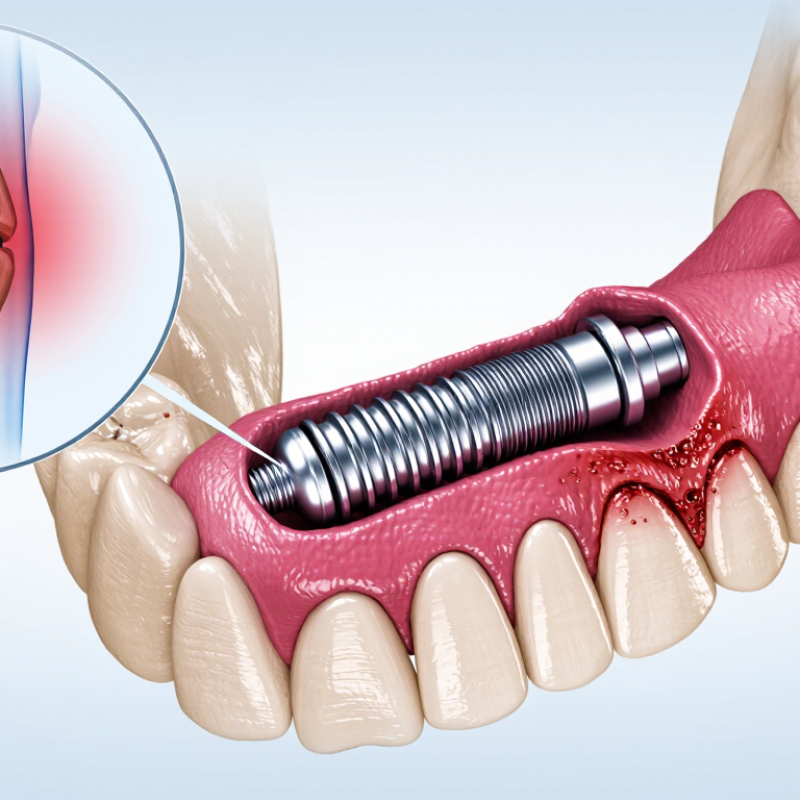
“Implant rejection” does not mean the same thing for every implant. With a transplanted organ, rejection is an immune response against the donated tissue. With a dental, joint, or other medical device, people often use “rejection” to describe problems such as infection, inflammation, poor integration, or loosening. The distinction matters. These problems have different causes and treatments.
Some soreness, swelling, and bruising can be part of early healing. The area may feel tender when touched, then gradually improve over days or weeks. That trend is more reassuring than symptoms that keep intensifying. Still, healing varies by procedure, and the line is not always neat. A little uncertainty is normal.
Contact your clinician if pain or swelling worsens, redness spreads, the site feels hot, or fluid drains from it. Fever, new difficulty using the implant, or a change in how it fits also needs prompt assessment. Don’t diagnose rejection from one symptom alone. A clinician may examine the site and use imaging or tests to find the cause. Seek urgent care for severe symptoms, such as trouble breathing or sudden chest pain.
An implant problem may begin quietly. Watch for pain that worsens instead of easing, especially after the initial healing period. New or increasing redness, warmth, swelling, or tenderness around the site also deserves attention. Some drainage can signal infection, particularly if it is cloudy, foul-smelling, or accompanied by fever. A wound that opens or fails to heal needs prompt medical review.
The details matter. Note when symptoms started, whether they are changing, and what makes them worse. A dental implant that feels loose, for example, should be checked; so should an orthopedic implant associated with new difficulty bearing weight. These signs do not prove that the body is rejecting an implant. Infection, irritation, poor healing, or a mechanical problem can look similar, and true immune rejection is uncommon with many implant types. It is easy to second-guess a mild ache, but don’t ignore a clear change. Contact the clinician who placed the implant, and follow their advice rather than adjusting or removing anything yourself. Seek urgent care for rapidly worsening symptoms, high fever, or severe pain. A clinician can examine the area and decide whether tests or treatment are needed.
Early warning signs to watch for
Each bar marks a symptom to watch for; it does not show how common or severe that symptom is. New or worsening pain, redness, warmth, swelling, drainage, fever, or implant movement can have several causes and does not by itself confirm rejection. Contact your treating clinician for advice. Seek urgent care for severe or rapidly worsening symptoms.
When patients say an implant is being “rejected,” doctors first clarify what they mean. True immune rejection is uncommon for most artificial implants. Pain, redness, swelling, drainage, firmness, or movement may indicate infection, inflammation, scar formation, or poor positioning. Symptoms can appear soon after surgery or develop months later. Timing matters.
During an evaluation, the doctor reviews surgical records, medical conditions, medications, allergies, and recent injuries. They examine the skin, incision, temperature, tenderness, firmness, and implant stability. They may compare current findings with earlier photographs. Small details can help, but examination alone cannot identify every cause.
Imaging depends on the implant and symptoms. Ultrasound may show fluid collections, while X-rays or other scans can assess position and surrounding tissue. Blood tests may check for inflammation, but normal results do not always exclude a local problem. If fluid or tissue looks concerning, doctors may collect a sample for laboratory testing. A biopsy is sometimes considered, but it is not automatically necessary.
A careful clinician avoids calling this “rejection” too early. The same symptom may have several explanations. I have found that patients often remember pain more clearly than its exact timing, so written notes can improve the assessment.
Seek urgent medical care for rapidly increasing swelling, severe pain, fever, spreading redness, foul drainage, or breathing difficulty. Do not squeeze the area or start leftover antibiotics without medical guidance.
How to Tell If Your Implant Is Being Rejected?
Medical Conditions That Can Resemble Implant Rejection
Redness, swelling, warmth, or pain can make patients fear implant rejection. However, these signs often have other causes. The meaning depends on the implant type, surgical site, and time since placement.
Infection may cause increasing tenderness, cloudy drainage, fever, or skin that feels hot. A fluid collection, called a seroma, can create swelling without infection. A hematoma may cause bruising, pressure, and sudden enlargement after surgery. These conditions require medical assessment, not guesswork.
Pain can mislead.
Capsular contracture can make a breast implant feel firm, tight, or visibly distorted. Dental implants may hurt because of gum infection, excessive bite pressure, or bone loss. Orthopedic implants can become painful because of loosening, fractures, nerve irritation, or poor alignment. An allergic or inflammatory response is possible, but it is less common and may resemble infection.
Timing matters. Mild soreness can be normal during early healing, while symptoms that worsen after improvement deserve attention. A clinician may examine the area and order imaging, blood tests, or fluid analysis. Do not massage, drain, or remove an implant without professional guidance. Even experienced clinicians can misread symptoms without the full surgical history. Seek urgent care for severe pain, rapidly spreading redness, heavy drainage, breathing difficulty, or a high fever.
“Rejection” can mean different things depending on the implant. For many devices, symptoms are more often related to infection, healing problems, or mechanical issues than to a classic immune rejection. Symptoms alone cannot identify the cause; contact your healthcare professional for an assessment.
| Possible cause | Signs that may occur | Clues and context | How clinicians may assess it |
|---|---|---|---|
| Infection around the implant | Increasing pain, warmth, redness, swelling, drainage, wound opening, or fever. | Can develop soon after surgery or later. Fever may be absent, especially in some people with weakened immune systems. | Examination; blood tests or imaging when appropriate; sometimes a sample of fluid or tissue for testing. |
| Mechanical loosening, wear, or displacement | New or worsening pain, instability, reduced function, clicking, or a change in implant position. | May follow normal wear, injury, or changes in the surrounding bone or tissue; symptoms depend on implant type. | Physical examination and imaging, such as X-rays or other scans selected for the implant and symptoms. |
| Delayed healing or tissue irritation | Tenderness, mild swelling, or sensitivity near the surgical area. | Some soreness can be expected during recovery, but symptoms that worsen, persist, or return after improving need review. | Review of the healing timeline and wound; further tests if the examination suggests a complication. |
| Metal or material hypersensitivity | Persistent itching, rash, or localized discomfort; symptoms are variable. | True implant-related allergy is uncommon. A skin allergy test does not by itself prove that an implant is causing symptoms. | Assessment for more common causes first; specialist review and selected allergy tests may be considered. |
| Dental peri-implant inflammation | Bleeding or swollen gum tissue, tenderness, pus, or increasing movement of a dental implant. | Inflammation around a dental implant may involve the surrounding gum and, in more advanced cases, supporting bone. | Dental examination, gum measurements, and dental imaging as needed. |
| Capsular contracture or fluid collection (breast implants) | Firmness, tightness, shape change, swelling, or discomfort around the implant. | These problems have several possible causes and are not the same as classic immune rejection. | Clinical assessment and, when indicated, imaging or fluid testing. |
| True immune rejection (transplanted organ or tissue) | Signs vary by organ and may include changes in organ function; symptoms can be subtle or absent. | Transplant rejection is distinct from reactions to most non-transplant medical devices. Do not stop prescribed anti-rejection medication without medical advice. | The transplant team may use organ-specific tests, blood tests, imaging, or a biopsy. |
Seek urgent medical care for severe or rapidly worsening pain or swelling, spreading redness, pus, fever with feeling very unwell, wound opening, sudden loss of function, or breathing difficulty. Contact the clinician who manages your implant if you notice a new or persistent change.
A dental implant does not usually get “rejected” like a transplanted organ. More often, pain, swelling, or looseness indicates infection, poor healing, excessive biting pressure, or bone loss.
Persistent bleeding, pus, a bad taste, fever, or an implant that moves needs professional assessment. Symptoms can overlap, so guessing at home can delay the right treatment.
Treatment depends on the examination, dental imaging, and the condition of the surrounding bone. A clinician may clean the area, adjust the bite, or prescribe antibiotics when a bacterial infection is present. Antibiotics alone cannot fix a loose implant. If the implant has failed to bond with the bone, removal may be necessary. After healing, bone grafting or another implant may be considered. Timing varies.
Seek urgent care for rapidly increasing facial swelling, trouble breathing or swallowing, uncontrolled bleeding, severe pain, or fever with worsening redness. These signs may indicate a spreading infection. Do not wait.
Contact the implant clinician promptly, even if discomfort seems mild. Avoid smoking, chewing hard foods around the area, or repeatedly testing the implant with your tongue.
I would not assume every sore implant has failed; irritation after surgery can be normal, but it should gradually improve. A second clinical opinion may help when the diagnosis or treatment plan remains unclear.
Usually, no. True immune rejection is uncommon with artificial implants. Pain or swelling may have other causes.
Redness, tenderness, drainage, firmness, or movement may need assessment. Timing matters too.
They review your medical and surgical history, examine the area, and may compare earlier photographs. Small details help.
Ultrasound can check for fluid. X-rays or other scans may assess position and nearby tissue. Blood tests may help, but normal results do not rule out every local problem.
No. A clinician may clean the area or adjust your bite. If the implant has not bonded with bone, removal may be considered.
Not by themselves. Antibiotics may be prescribed for a bacterial infection, but looseness needs clinical assessment.
Get urgent help for rapidly increasing swelling, severe pain, fever with spreading redness, uncontrolled bleeding, or trouble breathing or swallowing. Do not wait.
Do not squeeze the area or use leftover antibiotics without medical advice. Avoid hard foods near a dental implant and stop testing it with your tongue. I might underestimate how tempting that is.
Implant rejection is often misunderstood because true rejection is uncommon and differs from the normal healing process. Mild swelling, tenderness, bruising, or temporary discomfort may occur after implantation, but worsening pain, persistent swelling, unusual discharge, fever, skin changes, wound opening, or movement of the implant may indicate a complication. Patients may ask, “What are the symptoms of implant rejection?” The answer depends on the type and location of the implant, so symptoms should not be judged alone.
Doctors usually review the patient’s medical history, examine the implant site, and use imaging or laboratory tests when necessary. Infections, allergic reactions, poor healing, mechanical failure, or other medical conditions can resemble rejection. Treatment may include observation, medication, wound care, adjustment, or removal and replacement of the implant, depending on the cause. Seek urgent medical attention for severe pain, rapidly increasing swelling, high fever, breathing difficulty, heavy bleeding, or sudden implant displacement. Any concerning symptoms should be assessed promptly by a qualified healthcare professional.
Pure Orthopedic Implants